
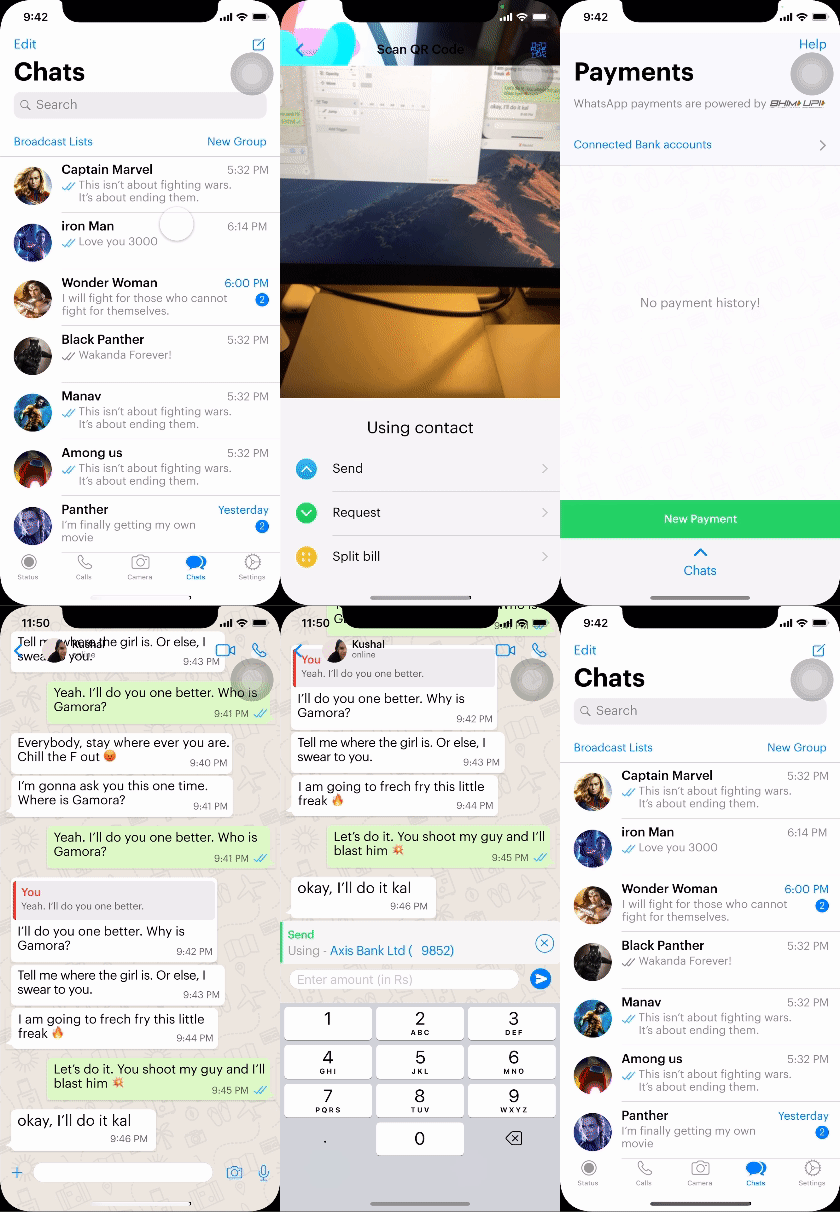
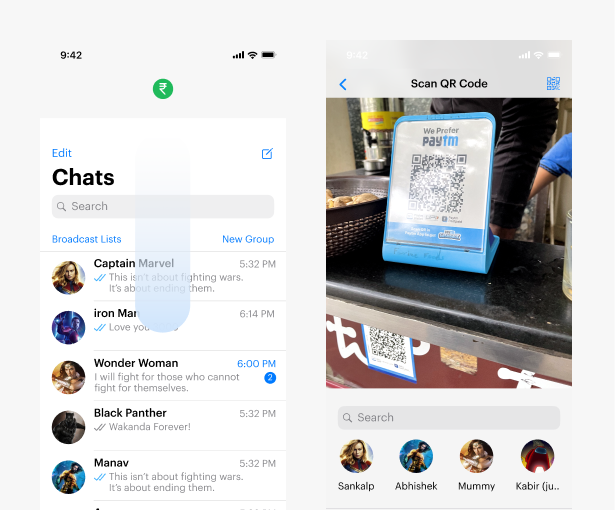
Throughout the project, I explored various interactions and entry points that could be used to initiate payments while ensuring that the context of conversations is preserved. When WhatsApp launched payments in India through the UPI infrastructure, it initially focused on P2P payments. However, for M2P payments, as users are unlikely to have the merchant's contact information, they rely on QR codes for identification. Payment apps like PhonePe emphasize M2P payments, allowing access with just one interaction. WhatsApp already includes a camera functionality that can be used for scanning QR codes.
How it will work?
- User types the necessary or just the required details in the chat box, for eg: Send 100Rs for momos (dumplings)
- User gets a payment icon with the user send message, to process the message as a WhatsApp payment request and not as a general message
- Message is interpreted to get the details for processing the payment
- User gets a payment icon with the user send message, to process the message as a WhatsApp payment request and not as a general message
- Message is interpreted to get the details for processing the payment
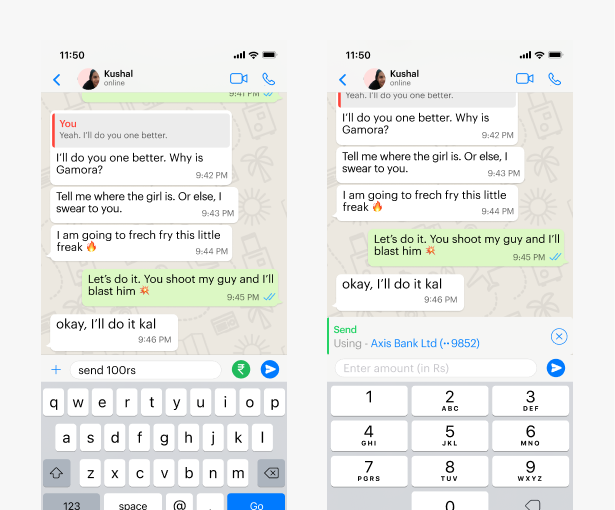
Lately, several payment applications have integrated chat functionalities, such as Google Pay and PhonePe. PhonePe, for instance, introduced a feature where if you type numbers, it interprets them as the amount of transaction. Razorpay has developed a WhatsApp bot for its merchants, allowing them to generate payment links simply by sending a message with the desired amount. Additionally, WhatsApp has now placed a payment entry point in its chat window.While the project's direction seemed promising, it's worth noting that not everyone is comfortable using a keyboard, especially if it's the sole means of interaction. Many users tend to rely on system-led flows in these cases. Also, leaving too much to the user's discretion without clear constraints in the messages can lead to confusion and dependency on the user.
